Search This Blog

Showing posts with label hadith. Show all posts

Friday, July 29, 2016

THE FOUR IMAMS R.A.

City of Kufa is close to City of najaf, which is close to Euphrates river, in IRAQ.

Karbala, Basra, Baghdad are also in Iraq.

Kufaa was conquered in Hazrat Umar RA's time in Battle of Yarmuk in 636 AD. Hazrat Umar RA sent Hazrat Saad bin Waqas RA to Kufaa to govern the people(one of the blessed 10 companions promised Paradise). The people of Kufa gave him a very hard time and eventually he had to leave this post, then Hazrat Umar RA sent Abdullah Ibn Masud RA to Kufa.  He develops Kufa into the centre of Islamic/Quranic learning. The last governor he sent was Mugahiyra bin Shuba RA. When Hazrat Usman RA came, he changed Mughayra bin Shuba RA with Waleed ibn Uqba RA(just to rotate governors which was the norm among Khalifas). After this, a lot  of issues arose and the people of Kufa turned against Usman RA. Then Ali ibn Talib RA came into khilafah, and the fitnaa had spread to Madhinah so Ali Ibn Taleb RA changed the khilafat to Kufa. But fitnah increased in Kufa, and Ali ibn Taleb RA was assassinated in Kufa by Khwarij. Then the caliphate went to Hassan RA, then to Muawiya RA who changed the capital to Damascus(this was the beginning of Umayyads). Hazrat Hussain RA was massacred in outskirts of Kufa. Kufaa never got along with Bani Umayyad and the Umayyads always used to suppress the people of Kufa.

The Umayyad khilafa was full of fitnaa from time of Yazeen Ibn Muawiya. The only good leader was Umar ibn Abdul Aziz RA.

There were 3 groups that developed:

Alawiyys(The Assad family) -the earlier supporters of Prophet SAWW,Hazrat Ali and his family. But the Alawiyys now  believe Jibrael AS made a mistake in sending revelation to Prophet SAWW and meant to send it to Hazrat Ali RA.

Abbasids: the descendants of Abdullah Ibn Abbas(who tried to revolt many times against Umayyads. Abdullah ibn Abbas was cousin of Prophet SAWW. Alawiyys supported them.

Khwarij: They were misguided and attacked nearly all groups and called them Kafir.

Kufaa and Basra was the base of all these 3 groups.Even religious fitnaa began with deviant groups mutazila etc . It also accepted foreign influence and philosophies.

Among Umayyads, the scholars were not allowed to comment on the government, and scholars were imprisoned if they criticised the government.

Imam Abu Hanifa RA was born in Kufa in this turmoil. Kufaa had a city centre and was more modern and had a lot of different policies and influences. Madinah and Arabia were more primitive and less influenced. Iraq was a mixed society and did not have the luxury of having the Madinah influence. Some Arabs used to consider they are superior but the scholarship transferred to a lot of non Arab people within the first hundred years.


->Before Imam Abu Hanifa there were 3 approaches.
1.Ahle hadith-  (the people of hadith)
Madinah(Imam Malik RA), Egypt(Laiys Ibn Saad RA), Sham(Imam Auzaaiye), Basra(Hassan Basri, Imam Ibn Sireen),Yemen
People of madinahh were mostly from the lineage of sahaba, and still had the good influence.

2.Ahle Raiyye- The people of Qiyaas(use of reasoning and logic)
They used hadith and reasoning and analogies. e.g. Imam Abu Hanifa RA


3.Zawaahir-literal interpretation of text(the apparent meaning) so they ignored the context of Quran and hadith and all the interpretations.
Also in Kufa and was by Dawood.

Able hadith and able raiyye had misconceptions in the beginning as Ahle hadith thought that Ahle Raiyye were rejecting hadith, but these were clarified when they met each other in their later life.


WHY AND HOW TO CHOOSE A MADHAB?
Hujjatullah baalighah(Shah Wali Ullah)- recommended book
Al Insaaf fi bayan sabab il ikhtilaaf- shah wali allah
Al khilaafu baiynal ulamai wa asbabuhu wa mauqif ma anhu - Ibn Tayyimah

All of these 4 madhabs are ahle sunnah was jamaah. 
IT is impermissible to use aqal(intellect) in the presence of naqal i.e. if Quran and hadith are explicit in something then we cannot use intellect and go against it.

The religion is profound enough to engage a professor and simple enough for an illiterate person to understand.  Religion is for everyone and appeals to everyone at different levels. Use whatever intellect has been given to you and you will be answerable according to your own intellect in front of Allah. Our problem is that we jump to conclusions and use our own logic to understand things without knowing the fundamentals of hadith, Quran, islamic history, Arabic etc. 
Hazrat Ali RA says if the religion was only about reason, then we will only do masah of the bottom, and not the top of socks.
Hazrat Ayesha RA said if religion was all about reason, women would have made up for salaah instead of fasts as salaah is more important. 

Fatwas have always changed according to circumstances and different eras. It is not one size fits all. Some circumstances are exceptional so fatwas are moulded accordingly. We need to know the context of different fatwas and not just cut copy paste. 

Different terms and titles have different meanings and different madahib. Before studying any book, we need to understand all the terminologies.It is impossible to understand all of these things without scholars and teachers or in depth studies. We can't even get worldly knowledge without teachers so how can we understand deen without teachers.
This does not mean that we cannot read books by ourselves and it also does not mean that we read everything and derive our own rulings. We need to have a balance. e.g. hadith about 72 sects, hadith about biddah etc. They cannot be understood without proper scholarship. 

Muhadditheen and fuqaha have very different personalities. Muhadditheen were staunch and stern about hadith so that they could be brutally honest in classifying and accepting ahadith from different people. They were also literalist in their approach to ahadith. 
Fuqua were generally softer people who were more compassionate towards different situations.

Why are there differences of opinion?

1. The evidence of /context of hadith was not known to any scholar at the time of fatwa. Not all sahaba were aware of all ahadith. 
e,g, what is the iddah of a pregnant widow? Sahaba RA were confused between end of pregnancy or 4 months 10 days. Some Sahaba thought she should wait for the longer period. But then Abu Musa RA brought a hadith which mentioned that iddah is the shorter of the two.

Umar RA was sitting in his house when Abu Musa RA knocked on his door 3 times and then left because he got no reply. Umar RA said why didn't you just enter in? He told about the hadith that Prophet SAWW forbade entering after knocking 3 times.

2. Hadith is known to the scholar but they doubt its authenticity so they go with reasoning until the hadith is authenticated. e.g. Fatima bint Qays was given 3 divorces and there was confusion about her Iddah.  There was a hadith that the relationship is absolved and she should stay away from her husbands home, but until it was proven Umar RA suggested that they should follow the ayah that she should stay in her husband's house

3. The scholar knew the hadith but he forgot it. It is possible for scholars to forget as they are human beings. 

4. Different Ulema understand a hadith differently e.g. what does LAMS mean, some scholars say its touch, some say intimacy. 

5. The scholar knows a hadith is authentic and remembers it, but it has been abrogated. e.g. the issue of alcohol. e.g. doing wuzu after eating anything cooked on fire e.g. people were allowed to speak in salaah

6.Scholar believes the hadith is authentic and is not aware whether it has been abrogated or not. A stronger hadith/text contradicts it or many scholars say that a consensus will take precedence over it. 

7.Scholar can make a judgement over a weak hadith/fabricated hadith but the scholar was unaware of it or it became weak after his era

8. A wrong ijtehad

9. Sometimes scholar disagree over authenticity of any hadith

HOW TO FIND A MADHAB

Madhab is a set of principles on how to derive an opinion and NOT a set of laws/rules.

Ruling on following a madhab depends on the level you're at

Following a madhab is not a condition of faith. Nobody is sinful if they don't follow a specific madhab. 


Taqleed linguistically means: something that is hanging around your neck, so it means you are suspending yourself from something

It technically means to follow without knowing the evidence.

For the common person, his madhab is the madhab of the one who is giving fatwa. He should go to a living scholar and ask. He should not fight with other madhahib but he should be humble. 

All scholars have studied the usoool of the madhahib. But does that mean it is impermissible to have a different opinion from a madhab? Can I switch madhabs? IF we just take the easier ones from every madhab then that is wrong. It would not be on the basis of any intellect or evidence. It would be following our empty desires. 

Following the established opinion of another madhab in a case of need is permissible, as long as that madhab is within able sunnah was jamaah. 

If you find concrete evidence that something is better in a different madhab(honest unbiased evidence), then it could be allowed(but you need to have a scholarship background).

It is best to follow the madhab of your own community or the imaam of your own community. 

Monday, June 6, 2016

Surah Naas


We should not try to give scientific rationale a higher place than Quranic revelation itself and we should not change the meaning of Quran just to make it more pleasing to others or to make it more scientific. People try to attack the hadith e.g. by saying that hadith were not compiled until around a 100 years after Prophet SAWW passed away, and the more authentic a hadith is the more fabricated it is and it has been covered up to make it seem authentic. Even some muslims doubt ahadith and say that they should not be used to interpret the Quran and they don't believe in context of revelation/shaan e nuzool.

The Quran was transmitted to us by the same sahaaba that transferred the ahadith. When you cannot trust them with ahadith, then you cannot even trust them with Quran? The Quran does NOT have contradictions but if we just look at ayahs without their context we will apparently find some contradictions, e.g. kill them wherever you find them vs. do not harbour animosity against anyone and treat them in the best way. Seemingly contradicting ayahs can be figured out when we look at their context, some surahs are mani some are makkki and the situation was different in these eras. Over simplification can lead to a lot of problems.

Surah Falaq was about outwardly sources of evil and Surah naaas is about the SOURCE of that evil i.e. Shaytaan. Allah not only protects us from evils outside ourselves as mentioned in Surah Falq but Allah also protects us from the evils inside us. The evils mentioned in Surah falq are out of our control, but those mentioned in Surah naaas are in OUR control as we can control our waswasa. Shaytan only invites us and WE are the ones who act upon it so this is a greater danger. The evils in Surah falq harm our dunyaa while waswasas harm our akhirah and imaan, so it needs to be guarded more. So we asked Allah's protection THRICE in Surah naas, we called Allah only once in Surah Falq.
The one we ask protection from is Mustaaaz bihi and the one we are escaping is Mustafa minhoo. The previous surah mentioned several mustaaz minhoo and one mustaaz bihi, and in this surah there is one mustaaz minhoo and several times mustaaz bihi is mentioned. That emphasises how strong this evil is and how strong a protection is needed.


قُلْ أَعُوذُ بِرَبِّ النَّاسِ
Say, "I seek shelter with the Lord of the mankind"

QUL is an act of Allah's obedience and this is a means of seeking Allah's help and refuge. We can only seek protection after we have obeyed Allah's command. Declare your need for protection as this is a humbling experience as we admit that ONLY Allah can protect us.

The people are the one who need protection in this Surah that is why Allah used Rabbinaas. The Rabb of people. RABB has several implications. Rabb means absolute owner. e.g. owner of house, owner of slave. It is different from MALIK as Rabb has many meanings and includes SAYYED(one who has complete authority and charge) e.g. we can own a car and not have absolute authority over its make up. It also means MURABBI (it comes from tarbiyah, tarbiyah means to ensure the growth and maturity of something until it reaches the maturity where it can be productive) Murabbi is the one who ensures growth.  Root word is Raa baa wow and this also comes in the duaa rabbirhamhuma kaman RABBAYANI sagheera. It is possible that we own something and don't take care of it e.g. the garden, our home maintenance. But Allah not only OWNS us but also takes care of us. Rabb also means MURSHID (guides towards proper usage, grant us rash and hidaya). It also means MUNIM(the one who gives gifts so whatever Allah gives is a gift and he doesn't owe us anything). It also means QAYYIM(the one ensuring existence of his subjects). So we only exist because Allah allows us to exist and nurtures us e.g. a very delicate plant only survives if we take care of it otherwise it will die if we don't water it.

RABB is the first name Allah used to introduce himself to Muhammad SAWW and Musa AS.Allah said Iqra bismi rabbikalazi khalaq.  Allah Himself has introduced Himself as RABB. Allah said to Musa AS Inni Ana rabbukk and later said inane AlalAllah. Allah said in Surah Fatiha Alhamdulillahi rabbil aalameen. That is how important RABB is. The Quran begins and ends with RABB.  The summary of Quran is to accept Allah as the master and ourselves as slave. We need to internalise it. This guidance will only benefit those who accept themselves as slaves. We have to say iyyaka nabudu wa iyyaka nastaeen and only then we can say ihdinasiraatul mustaqeem. The Quran begins and ends with the emphasis that Allah is our rabb and we are His ABD. When we say we are his slave, that put us under his authority and we need to follow Allah's guidelines to live our life. We have to live our life according to Quran.


مَلِكِ النَّاسِ
King of mankind

One of the first realisation a child has is that his needs are being taken care of by his parents. MURABBI is one of the first realisations we have. Sometimes the problem is so big that parents cannot take care of it, then we need to go to the King/ Government. Then sometimes the problem is SO big that we can only ask ALLAH for help and have no one else to turn to on earth. There is a psychological progression. People tend to turn in dunyaa first to their loved ones and then to their king and higher authority and then to Allah. But Allah teaches us to go immediately first to our Rabb, we should turn for EVERYTHING to Allah. Ask Allah even if for a shoelace. So Allah fulfils all our needs so HE is our KING ALLAH and RABB.

There can be multiple caretakers in dunyaa but only one king in a country, but there is only one Allah in the whole universe so all these names have a logical progression and they become more and more specific to Allah. Allah cannot have ANY worldly implications as it is exclusively for Allah. It is a progression from more to less.

Caretaker can only take care of a few people, the king can take care of more people as he can watch over a country. Allah can watch over everyone. So NAAS is from qillat to qasrat as the people keep increasing. Allah does not repeat naaas just for beauty of language but it also has such hidden connotations.

Whenever we recite Quran, we should  be seeking refuge from Allah as Surah Fatiha begins, and we also end Quran seeking Allahs protection.

Who is the biggest victim of Shaytaan? Firaun. Firaun claimed to to be the rabb of people. Then he said don't I own the whole kingdom. He also called himself the maalik. Firaun also said to his generals: I don't know of any other Ilaah for you than myself. So Firaun tried to claim Allah's position, all 3 positions. His biggest problem was arrogance and shaytaan can also put that arrogance within us and that is a major waswasa. In this world, people declare themselves their OWN master, their own king, their own Ilaah. They think they own themselves and have full control over their lives and their lifestyles. We become mini Firaauns when we have ego and we think we do whatever we like. Allah crushes this ego by saying us to seek his protection at the start of this surah.

One of the root origins of Naas is Nisyaaan which means forgetfulness. People forget the promise they made to Allah when Allah asked us Am I NOT YOUR RABB? Allah has given Shaytaan the ability to make people forget, and they even forget Allah when living their life. They forget Allah while committing sins. We ask Allah to  be people of remembrance and not be people of forgetfulness. When we recite Quran we should seek Allah's refuge so that we are conscious and aware of Allah while doing every act. If the heart is filled with Allah's remembrance, then Shaytaan cannot enter it, but when the heart is an empty vessel and vacant, then Shaytaan will penetrate it and make us forget.

Allah has also repeated Naas to honour human beings by putting our name next to Allah's thrice.

MALIK is the authority of Allah. and the third name ALLAH includes both RABB and MALIK.


إِلَهِ النَّاسِ
God of mankind
ILAAH comes from alihaa which means to incline towards someone, to stick to someone, to go towards someone, to be obsessed with someone. so Allah is the one we should be constantly turning to. Allah also means one who should be worshipped AND obeyed. Ibadah includes worship and obedience. Firaun also said to his generals, who is your ilaah except me? so Ilaah is used in the context of obedience here. Some people are offered some very strong temptations e.g. a haram lavish job, then they have to remember that Allah is the ilaaaah and we should obey him.


  • مِن شَرِّ الْوَسْوَاسِ الْخَنَّاسِ
    From the mischief of the whisperer (of Evil, the Satan or the Evil one) who hides away (after his whispers
  • Shaytaan plants himself right above the heart of human being, and as soon as a human becomes lax and ghaafil, Shaytaan puts a waswasa, and as soon as he remembers Allah , Shaytaan retreats. (mafhoom of a hadith). Shaytaan keeps turning back to give waswasas. He NEVER takes a break from making us forget. Although we do take breaks from remembering Allah. Shaytaan works really hard to throw people into the fire. Shaytaan wants to instil his kibar into others and one manifestation of kibar is anger, that is why we seek Allah's refuge when we are angry.

    There is not anyone of you except that there is a constant partner assigned to him. Also with Muhammad SAWW. But Allah has aided Muhammad SAWW so he does not tell me anything but good. (mafhoom of hadith)

    The messenger SAWW returned Safiyah RA to her home, and on the way two Ansar are walking by, and he tells his wife to stop and says that this is Safiyah. The sahaaba said why are you saying this, why are you explaining, we won't think anything wrong. Then our prophet SAWW said that shaytaan flows in us like blood and I feared he might put a waswasa in your heart. (mafhoom of hadith) Shaytaan also puts waswasa in our mind against Prophet SAWW and tries to turn us away from hadith and sunnah. People who don't have knowledge and don't remember Allah and leave a vacancy for Shaytaan are victimised by Shaytaan. Shaytaan plants an ego within our hearts that why should we follow Prophet SAWW, he is just a human like us, so why should we accept his authority over us. We don't like accepting authorities over us so we don't like the police, the boss, the teacher, the judge. So it's hard for us to accept Prophet SAWW as the ultimate authority, it is relatively easy for us because we are not in his era.  But how hard was it for people who were in his time as now his friends and family have to accept him as the ultimate authority. People keep asking IS IT IN THE QURAN? They don't say is this in the QURAN AND SUNNAH? People remove the sunnah from the Quran and separate them.

    SHARR is a harmful evil and a spark that can harm us.
    Shaytaan comes from shatana or shaaata and it means being consumed with rage.

    Waswasa is translated as whisper. Hams is another word that comes for whisper. Hams can have a positive or negative context but Waswasa is only negative. Haamis is someone who whispers but waswasa refers to whispering again and again(syllables repetition also point towards repetition of the act).  Why did Allah not use the word Muwaswis? Allah used WASWAAS which is mubaalga, because Shaytaan is an obsessive compulsive whisperer and he repeats again and again. It refers first and foremost to ibleees as Allah used AL WASWAAS.

    Some scientific people have the concept that Iblees is dead and now his followers are doing his job. This is false as Iblees is still around according to Quran.

    Why did Allah say whisperer instead of whispering? Why waswaas and not waswasa? The one who does the whispering can do more evils than just the whisper.  So we seek Allahs protection from he whisperer when he whispers or does any other evil. It is more comprehensive. Then Allah says KHANNAAS. It was also used in Quran to refer to stars that twinkle and then disappear.  Allah did not use the word KHAANIS but he used KHANNAAS, so KHANNAAS is the one who KEEPS stepping back. Shaytaan keeps stepping forward and seeking refuge keeps pushing him back. Shaytaan keeps doing it over and over again and never gets tired. e.g. the seegha FA'AAL means that the person keeps doing the thing over and over again like WAHHAAB means keep giving gifts GHAFFAAR means keeps forgiving. Waswaas is his offence and Khannaas is his defence.

    We express our humility and ask protection from Shaytaan who is most arrogant. Allah says no doubt about it, my slaves, you will have NO authority over them. When we call Allah RABB we are His IBAAD and slaves so that means Shaytaan can have no authority over us if we become slaves of Allah.
    We should be in a state of wudhu and physical cleanliness in addition to seeking Allah's protection through spiritual duaas and Quran

    الَّذِي يُوَسْوِسُ فِي صُدُورِ النَّاسِ
    (the same Evil one) who whispers into the Hearts of mankind
    .
    Allah first called him waswaas and then said he whispers into the chest of mankind. That is his job and he does it so Allah is re emphasising it. He whispers into the chest of the people. Sadrr is zarf makaan(it is a place). Allah did not use the word hearts but he used the word CHEST. The heart is like a castle and there is an open real estate around it, Allah gave him access to the area around the castle but not INTO the castle. The only one who has the key to the door is US. Shaytaan is waiting to pounce and enter the heart. WE let him enter into our heart by leaving the doors open. When imaan leaves the heart, evil deeds are beautified for us. Evil deeds are disgusting to us when we have imaan and they are tempting to us when we lose imaan. If we let Shaytaan make his way in, he will beautify evil for us

    مِنَ الْجِنَّةِ وَ النَّاسِ
    Among the jinns and the men
    Sometimes Allah mentions humans first and sometimes jinns first. When Allah talks about animosity against the Prophet SAWW, he mentions people first and when the context is whispering and waswasa then Allah mentioned jinn first. If a human being whispers something, then it might be his own idea and might be from Shaytaan so Allah mentions the SOURCE first which is Shaytaan. Ibleees uses jinn and people to conduct his waswasa.  Shaytaan uses people as puppets to transmit waswasa. He uses technology to give waswasa.

    Connections between Surah falq and surah fatiha

    This Surah is connected to Surah Falq and Surah fatiha. Prophet SAWW's sunnah was to finish Quran and then recite Surah Fatiha immediately as this teaches us that there is no end to completing Quran and we should start over again, and these two surahs have powerful connections. In Surah fatiha we ask for Istiaaana HELP, and in this surah we ask for Istiaaza PROTECTION from people who are trying to keep us from that task. Sarah fatiha has Rabbil aalameen and maaliki youmiddin and iyyaka nabudu which are the same 3 names mentioned in Surah naas. Sarah fatiha is more positive so rahmah word is used and Surah naas has a more negative theme as it mentions evil so rahmah is not used. This surah begins with asking for protection and Surah fatiha ENDS with asking for protection so they have a reciprocal relationship. Aauzu is a singular world used in Surah naas, and Surah fatiha has a plural word iyyaka nabudu wa iyyaka nastaeen. Surah Fatiha was more about general collective guidance as an umma, while Surah Naas is about individual guidance. There are two possible sources of evil influences in Surah naas, jinn and humans. Sarah fatiha is about two negative influences, maghzoobi alaiyhim and zaaleen. Everything that came before iyyaka nabudu in Surah fatiha is linked to iyyaka nabudu, and iyyaka nastaeen is linked to the second half of surah fatiha.  Sarah naas had two halves, about mustaaz bihi and mustaaz minhu (the one who's protection is sought and the one from whom protection is sought)

    Our human race was sent to Earth because of the waswasa of Shaytaan so it all started with the waswasa of Shaytaan. Ibleees said you won't find most people grateful and they will disobey you, and Surah Fatiha begins with us starting with hamdd and gratitude of Allah. Shaytaan revealed what was hidden under their clothes(their hayaa) so that is the strongest attack of shaytaan.

    The Quran begins and ends with duaa so duaa is extremely important. Don't underestimate the power of duaa.

    Friday, March 25, 2016

    Historical, Spiritual and Intellectual approaches to Islam - Shaykh Kamaluddin Ahmed

    Part 1:Introduction to ethics and theology

    We make the mistake of using only our intellect to understand deen and we forget about our hearts. If you listen to the story of converts, most converts were guided by their hearts.


    STUDY OF RELIGION

    1)FAITH BASED (CONFESSIONAL)

    Faith based study of religion is based on personal faith so certain things are not allowed to be questioned e.g. Allah,prophethood etc. It is based on the confession that you believe in the foundations of faith.


    2) SECULAR

    Secular approach necessitates that you don’t bring your belief in Allah in your study of religion, and you keep your mind open to the possibility of disbelief. It involves questioning everything including God,prophets, afterlife etc

    3)DIVINITY SCHOOL APPROACH

    If we combine both these approaches, we get the divinity school of approach which is open to questions but does not question Allah Himself or the very foundations of belief. Divinity school of approach uses faith based education combined with modern education and it involves an analytical approach to Islam but not a critical approach in which the foundations are criticised.

    CRITICAL VS ANALYTICAL

    Critical thinking is a good thing in itself. But, we should not be willing to critique Allah, the Qur’an, and the Messenger. The word analytical is more preferable because we embark on an academic study without criticising the core foundations of Islam.

    THEOLOGY

    Aqeedah= creed e.g. in Sunnis, aqeeda tahaviya is most popular. It consists of basic sets of beliefs about Allah, Prophethood, angels, scriptures etc.
    Another book on aqeedah is by Imam Ghazali RA (Al Risala Qudsia)

    Ilm ul Kalaam= Dialectical theology,analytical approach trying to understand matters of faith. e.g. What does it mean that Allah has zaat and sifaat?freewill and predestination? Why did Allah create evil? Why did Allah create eternity? All of these discussions are in ilm ul kalaam but they are based on the Quran and Sunnah.

    WHAT IS DEEN?

    كَانَ النَّبِيُّ صلى الله عليه وسلم بَارِزًا يَوْمًا لِلنَّاسِ، فَأَتَاهُ جِبْرِيلُ فَقَالَ مَا الإِيمَانُ قَالَ ‏"‏ الإِيمَانُ أَنْ تُؤْمِنَ بِاللَّهِ وَمَلاَئِكَتِهِ وَبِلِقَائِهِ وَرُسُلِهِ، وَتُؤْمِنَ بِالْبَعْثِ ‏"‏‏.‏ قَالَ مَا الإِسْلاَمُ قَالَ ‏"‏ الإِسْلاَمُ أَنْ تَعْبُدَ اللَّهَ وَلاَ تُشْرِكَ بِهِ، وَتُقِيمَ الصَّلاَةَ، وَتُؤَدِّيَ الزَّكَاةَ الْمَفْرُوضَةَ، وَتَصُومَ رَمَضَانَ ‏"‏‏.‏ قَالَ مَا الإِحْسَانُ قَالَ ‏"‏ أَنْ تَعْبُدَ اللَّهَ كَأَنَّكَ تَرَاهُ، فَإِنْ لَمْ تَكُنْ تَرَاهُ فَإِنَّهُ يَرَاكَ ‏"‏‏.‏ قَالَ مَتَى السَّاعَةُ قَالَ ‏"‏ مَا الْمَسْئُولُ عَنْهَا بِأَعْلَمَ مِنَ السَّائِلِ، وَسَأُخْبِرُكَ عَنْ أَشْرَاطِهَا إِذَا وَلَدَتِ الأَمَةُ رَبَّهَا، وَإِذَا تَطَاوَلَ رُعَاةُ الإِبِلِ الْبُهْمُ فِي الْبُنْيَانِ، فِي خَمْسٍ لاَ يَعْلَمُهُنَّ إِلاَّ اللَّهُ ‏"‏‏.‏ ثُمَّ تَلاَ النَّبِيُّ صلى الله عليه وسلم ‏{‏إِنَّ اللَّهَ عِنْدَهُ عِلْمُ السَّاعَةِ‏}‏ الآيَةَ‏.‏ ثُمَّ أَدْبَرَ فَقَالَ ‏"‏ رُدُّوهُ ‏"‏‏.‏ فَلَمْ يَرَوْا شَيْئًا‏.‏ فَقَالَ ‏"‏ هَذَا جِبْرِيلُ جَاءَ يُعَلِّمُ النَّاسَ دِينَهُمْ ‏"‏‏.‏ قَالَ أَبُو عَبْدِ اللَّهِ جَعَلَ ذَلِكَ كُلَّهُ مِنَ الإِيمَانِ‏.‏
    Narrated Abu Huraira:
    One day while the Prophet (ﷺ) was sitting in the company of some people, (The angel) Gabriel came and asked, "What is faith?" Allah's Messenger (ﷺ) replied, 'Faith is to believe in Allah, His angels, (the) meeting with Him, His Apostles, and to believe in Resurrection." Then he further asked, "What is Islam?" Allah's Messenger (ﷺ) replied, "To worship Allah Alone and none else, to offer prayers perfectly to pay the compulsory charity (Zakat) and to observe fasts during the month of Ramadan." Then he further asked, "What is Ihsan (perfection)?" Allah's Messenger (ﷺ) replied, "To worship Allah as if you see Him, and if you cannot achieve this state of devotion then you must consider that He is looking at you." Then he further asked, "When will the Hour be established?" Allah's Messenger (ﷺ) replied, "The answerer has no better knowledge than the questioner. But I will inform you about its portents.
    1. When a slave (lady) gives birth to her master.
    2. When the shepherds of black camels start boasting and competing with others in the construction of higher buildings. And the Hour is one of five things which nobody knows except Allah.
    The Prophet (ﷺ) then recited: "Verily, with Allah (Alone) is the knowledge of the Hour--." (31. 34) Then that man (Gabriel) left and the Prophet (ﷺ) asked his companions to call him back, but they could not see him. Then the Prophet (ﷺ) said, "That was Gabriel who came to teach the people their religion." Abu 'Abdullah said: He (the Prophet) considered all that as a part of faith. (Bukhari)

    Foundation of deen is based on Hadith e Jibreel.
    Hadith of Jibrael AS: Deen= imaan(Ilm ul kalaam) +Islam(Ilm ul fiqh)+Ihsan(Ilm ul tazkiyah)+signs of end of times and coming of akhirah(social realities)

    • Ilm ul kalaam is the study of Iman. Ilm ul kalaam are the analytical discussions based on Quran and Sunnah

    • Ilm ul fiqh is the study of Islam. Ilm ul fiqh is the textual understanding of Islam based on Quran and Sunnah about how to follow deen practically

    • Ilm ul tasawwuf/tazkiya is the study of Ihsan. Ilm ul tazkiyah and tasawwuf is about creating feelings of Ihsan, to stand before Allah as if we are looking at him or He is looking at us.

    Let's take an example of a sign of end of times: a slave girl giving birth to her mistress. If we take the literal meaning, it seems far fetched that a slave girl would become free and then enslave her own mother. If we take an analytical meaning, we can get a wide meaning that it implies the upheaval of social order and family values and it implies that the daughter will be disrespectful towards her mother. Or we can turn the knob further and say that it refers to general social chaos and upheaval. So we can turn the knob to zero and take the literal meaning or turn the knob to one and take a deeper meaning.

    The barefoot,destitute shepherds will compete with one another. If we keep the knob at zero, they have to be literally naked and barefoot. But if we take an analytical approach, we can imagine that poor people are now building skyscrapers e.g. in dubai and Saudi arabia where poor people are being used to build skyscrapers. If turn the knob completely, we can get a broader meaning of competition to pursue material ends and materialism.

    WHAT IS IMAAN?

    Building the workshop
    Even if I have to answer just one question e.g. What is Imaan, we would have to build a workshop and use all the verses, hadith, historical aspect, context, texts, spiritual realm, linguistic meanings, usage in arabic, all the things that can increase and decrease the feelings of imaan, and the people who were spiritual embodiments of imaan. It is a multilayered approach. It is not simple at all. We have to bring EVERYTHING to the table to come to the conclusion.

    Definition involves making a border and defining something precisely and specifically to include all elements of that set and excludes all elements outside of that set. So imaan needs to be defined so precisely so that people of Imaan are included and others are excluded. There exists a multiplicity of meanings in deen. Some people get confused by disagreements  and don't understand that there can be multiple meanings even for something like imaan.


    Verse 2:286 says to believe in everything that was revealed to Prophet SAWW, and this means belief in the UNSEEN. To believe in the unseen as if it was seen= Iman. Faith means belief in the unseen,belief in the ghayb. Shahada means to believe in something seen and we say the shahada when accepting Islam, which means we have to believe so strongly as though we can see it. Atheists believe in empiricism i.e. belief in things that can be seen or observed.

    Positions on Imaan?
    • Heart - a feeling that lies in the heart only
    • Tongue - expression of imaan with their tongue by saying the kalimah
    • Heart+tongue - truly believe in their heart and express on tongue
    • Heart+tongue+actions - believe in heart, express with their tongue and manifest in their actions

    If we take imaan as just something in the heart, then it would be incomplete.

    If we take it as just something from the tongue, then niyyah and heart would be disregarded.

    If we take heart plus tongue plus actions then that would leave a very narrow definition of imaan and everybody  would be kicked out of imaan.

    When we have multiple positions, we either have to find common ground(tatbeeq) or give preference to one position(tarjeeh). The conclusion of the workshop was that imaan should be in the heart but it should be professed from the tongue.


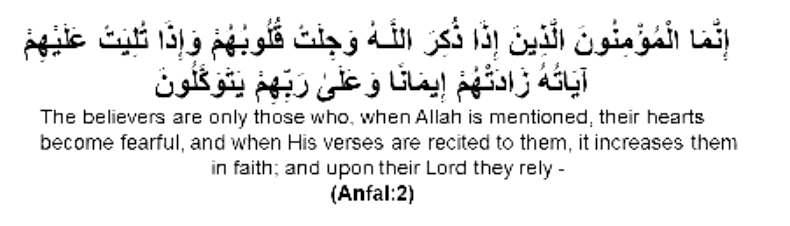
    This is an ayah about imaan increasing and decreasing. When Quran is recited, their hearts tremble and their imaan goes up. So that means imaan is variable in intensity. Some people think quality of imaan goes up and down and some think quantity of imaan goes up and down. Imam shaafi thinks its quantitative and units of imaan go up and down. Imam abu hanifa thinks quality and passion of imaan goes up and down.


    This ayah says that don't say you have imaan, say you have Islam. So what is the difference between Islam and Imaan? One position is that Islam and Imaan are identical when used separately and are different when used together, together imaan means what's in the heart and islam means the outward practices.


    The hadith says nobody does adultery while being a momin. Does that mean Imaan leaves the heart if we commit major sins? Does this apply only to adultery or to all major sins? Does the Iman return after completing the act of sin?


    This hadith says that Iman has branches. Does that mean imaan has components? What are the components? Do we need to have all components?

    We need to build a workshop to answer all of these questions.

    BOUNDARIES OF IMAN

    INCLUSIVISM
    Everyone who calls himself a Muslim, has Islam

    EXCLUSIVISM
    Some people are excluded from Islam e.g. all Ulema agree that a person is excluded from Iman if he believes there is another Prophet after Prophet ﷺ. We can coexist peacefully with groups who have these beliefs, but these groups should not claim to be a Muslim. A Muslim cannot claim to be an Orthodox Christian. A Jew cannot open a synagogue and call it a church. A muslim cannot call his mosque a Catholic church. It is not freedom of religion to claim someone else’s identity.

    PLURALISM AND TOLERANCE
    There are many theological sects in the Muslim world. How do you set boundaries?

    Recommended reading: Boundaries of theological tolerance in Islam - Dr Shermen Jackson (OUP)